How to Make Mealtime Easier for a Senior Dog With Mobility Issues
If your older dog is straining to reach their bowl, eating less, or walking away mid-meal, it's not pickiness. For dogs with arthritis, neck stiffness, or weak rear legs, the physical act of eating can be genuinely uncomfortable. This guide walks you through simple setup changes, food adjustments, and positioning tips that make mealtime easier on their body — starting today.
Quick Answer
If your senior dog is struggling at mealtime, start here: raise the bowl to elbow height, place it on a non-slip mat, and soften their food if chewing seems effortful. Those three changes solve most of the problem for most dogs. Then read on for the details that match your dog's specific situation.
Who This Is For
- Dogs with arthritis or stiffness in the neck, shoulders, or spine
- Dogs who eat in a wide-legged stance or shift their weight while eating
- Dogs whose rear end wobbles or drifts during meals
- Dogs who eat slowly, stop and start, or abandon meals early
- Dogs who have recently had spinal surgery or a disc issue
- Dogs eating on hardwood, tile, or any slippery surface
What to Look For
Before you buy anything or change anything, here's the criteria that actually matters.
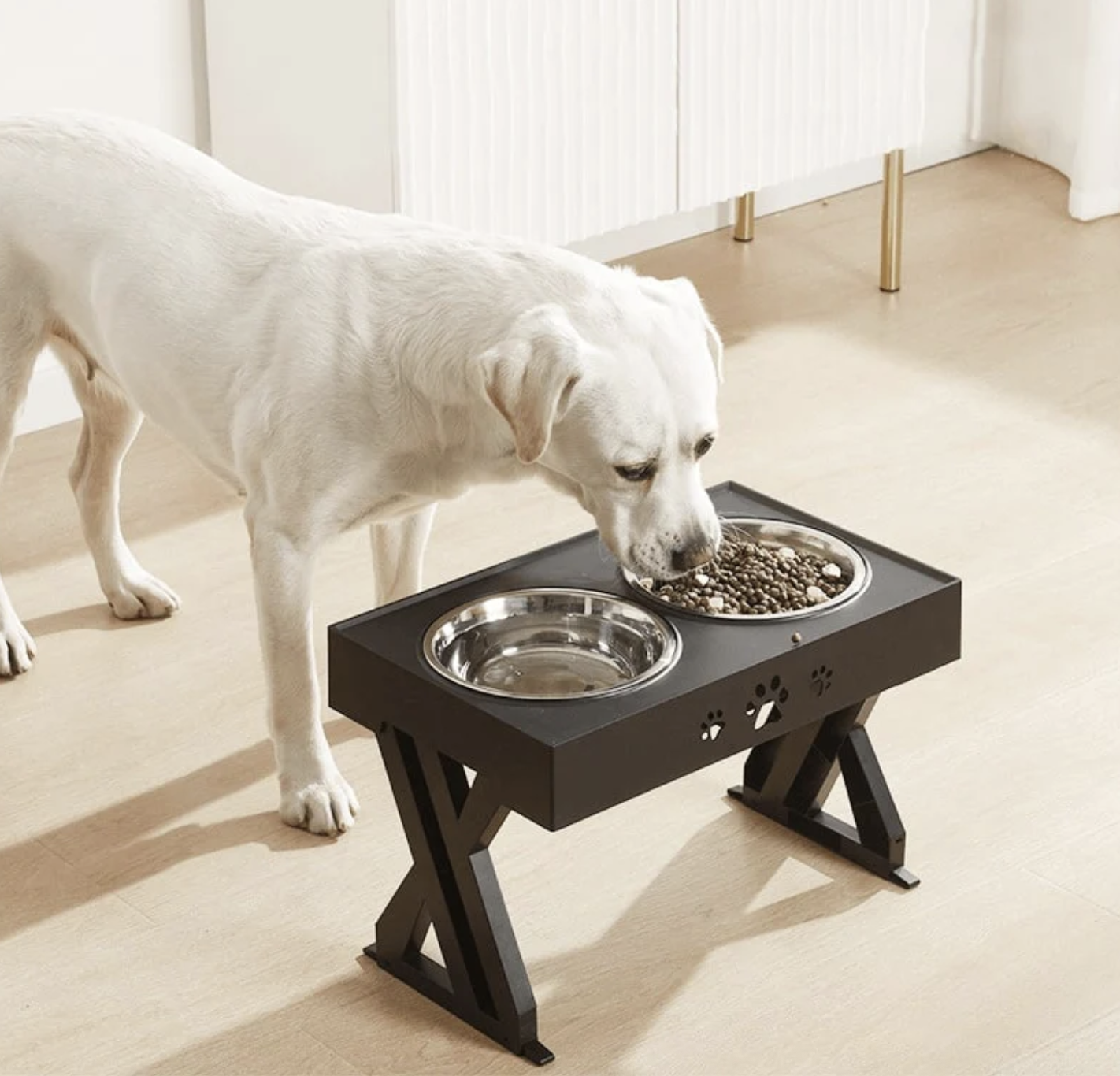
Bowl height. The goal is that your dog's neck stays roughly level or slightly angled down — not craning toward the floor, not reaching up. A rough starting point is elbow height. Some dogs with certain spinal conditions actually do better eating from the floor, so watch how your dog holds their body and adjust from there.
Stability. The bowl and the stand need to stay put. A dish that slides or tips mid-meal is stressful for a dog who's already working hard just to stand.
Surface grip. The floor under the bowl matters as much as the bowl itself. Slipping while eating is exhausting and discouraging for a dog with weak legs.
Ease of cleaning. You'll be washing this daily. Stainless steel bowls in a removable holder beat anything that's hard to take apart.
Bowl size and shape. Wide, shallow bowls are easier for dogs who can't lower their head much. Deep narrow bowls make dogs dip further in, which can strain a stiff neck.
Food texture. If chewing is difficult or swallowing seems slow, texture matters as much as equipment. Softer food reduces effort.
Return policy. Raised feeders vary a lot in height. Buy from somewhere with easy returns so you can exchange if the height is off.
The Setup, Step by Step
Step 1: Measure for Bowl Height
Stand your dog next to a wall and mark where their front elbow falls. That mark is your starting target for the bottom of the bowl. Most medium dogs land between 4 and 8 inches. Large dogs often need 10 to 12 inches.
Don't just guess — a feeder that's two inches too high can strain a neck just as much as eating off the floor.
Step 2: Put a Non-Slip Mat Under Everything
Before the feeder arrives, put a non-slip mat or rubber-backed rug under the feeding area. This is free if you already have one in the house and it makes an immediate difference. Your dog shouldn't be spending energy just staying upright while they eat.
Good options are rubber-backed bath mats, yoga mats cut to size, or mats made specifically for pet feeding stations.
Step 3: Choose the Right Raised Feeder
This post contains affiliate links. If you buy through them, we may earn a small commission at no extra cost to you.
You don't need an expensive feeder. You need one that's stable, the right height, and easy to clean.
COMESOON Elevated Dog Bowls — 4 Height Adjustable (Best for Medium to Large Dogs) Adjusts to 3.7", 9.2", 10.75", or 12.36". Comes with two thick 50oz stainless steel bowls, non-slip feet, and requires no assembly. One of the top-rated feeders in its category.
- Best for: Medium and large seniors who need a specific height match
- Watch out: The stand is on the wider side — measure your feeding space first
- 👉 View on Amazon
Niubya Elevated Dog Bowls — 5 Adjustable Heights (Best for Finding the Right Fit) Offers five height settings from 3.15" to 12.2", giving you more flexibility to dial in the exact height your dog needs. Includes two stainless steel bowls and non-slip feet.
- Best for: Dogs where you're still figuring out the ideal bowl height
- Watch out: More height options also means more steps to adjust — follow the directions carefully
- 👉 View on Amazon
Dogit Stainless Steel Elevated Dog Bowl — Simple Single Bowl (Best Budget Option) A no-fuss, single stainless steel bowl on a fixed-height base. Less adjustability, but very stable and easy to clean. Reviewers specifically mention using it for senior dogs.
- Best for: Dogs whose ideal height you already know, or as a low-cost starting point
- Watch out: Not height-adjustable, so confirm the measurements match your dog before ordering
- 👉 View on Amazon
A folded towel or a step stool with a non-slip bowl on top Genuinely fine as a starting point while you figure out the right height. Don't let the search for the perfect feeder delay you.
- Best for: Trying before you buy, or tight budgets
Step 4: Switch to a Wide, Shallow Bowl
If you're using a deep bowl, swap it for something wide and shallow. Your dog won't have to dip their nose as far down and can eat at a more comfortable angle. Stainless steel is easier to keep clean than ceramic or plastic.
Step 5: Soften the Food If Needed
If your dog is eating slowly, dropping food, chewing carefully, or leaving food in the bowl they used to finish, texture may be part of it. A few options:
Adding warm water to kibble and letting it sit for a few minutes softens it significantly without changing the nutrition. You can also mix in a spoonful of wet food. If your dog is already on wet food, warming it slightly (not hot, just room temperature or a little above) can make it more appealing and easier to eat.
If you're considering a full switch to wet or softened food, that's worth a conversation with your vet to make sure the food you choose still meets their nutritional needs.
Step 6: Think About Positioning
Where the bowl is placed in the room matters too. Avoid:
- Corners where your dog has to back out awkwardly
- Spots near stairs or thresholds they might stumble over
- Areas where other pets can crowd them
Give them a clear approach path, room to stand with all four feet square, and space to back away comfortably when they're done. A small non-slip runner from their bed to their bowl can help dogs who are cautious about moving around the house.
Step 7: Watch How They Eat and Adjust
After a week with the new setup, watch a few meals. Is your dog staying at the bowl longer? Standing more comfortably? Finishing their food? If something still looks off — head tilting, straining, favoring one side — note it and bring it up with your vet.
Common Mistakes
Guessing the bowl height instead of measuring. Too high strains the neck just like too low. Take two minutes and measure.
Buying a raised feeder and skipping the non-slip mat. The feeder is only half the fix. If the floor is slippery, your dog is still working hard.
Using a deep, narrow bowl. These make dogs reach down further than a wide shallow bowl. Simple swap, real difference.
Switching food texture all at once. If you're moving to softer food, a gradual transition over a week or so is easier on digestion than an abrupt change.
Feeding near high-traffic areas. Senior dogs benefit from a calm, low-pressure mealtime. A busy kitchen spot can cause them to rush or give up.
Ignoring slow eating as "just getting older." Eating speed can be a signal. Gradual changes are worth monitoring. Sudden changes are worth a call to the vet.
Buying the feeder and never adjusting it. If your dog's mobility changes, the ideal bowl height may change too. Revisit it every few months.
Safety and Vet Note
If your dog is suddenly reluctant to eat, gagging, coughing while eating, losing weight, or you notice any new weakness or pain around mealtime, don't wait on a setup change — call your vet. These can signal issues with swallowing, throat, or spine that need a proper evaluation. The tips in this post are for comfort and ease, not treatment.
FAQ
Should all senior dogs use a raised feeder? Most benefit from one, but not all. Dogs with certain neck or spine conditions may actually do better eating from a lower position. If your dog has had a diagnosis involving the spine or neck, check with your vet before raising the bowl.
How high should the bowl be? A common starting point is elbow height — where the front leg bends. Watch your dog eat and adjust if they're straining up or dipping down.
Can I just use a box or books to raise the bowl? Yes, while you're figuring out the right height. Just make sure it's stable and won't tip.
My dog ate fine for years on the floor. Why is it suddenly an issue? Arthritis and muscle loss progress gradually. What worked at seven may not work at eleven. The bowl didn't change — your dog's body did, and that's okay to adapt to.
Is wet food better for senior dogs with mobility issues? Not automatically, but if chewing or swallowing is harder, a softer texture reduces the effort. Talk to your vet about whether a food change makes sense for your dog's overall health.
How do I know if the new setup is helping? Watch for meals finished more fully, more time spent at the bowl without backing away, and a more relaxed posture while eating. Improvement is usually visible within a week.
Your Next Step
Today: measure your dog's elbow height, put a non-slip mat under their bowl, and watch one full meal. That's enough to start.
If you want to go further, look at the rest of your dog's daily environment with the same eye for comfort and safety.
Related posts to read next:
- How to Set Up a Safe and Comfortable Sleeping Area for a Senior Dog
- Best Non-Slip Solutions for Senior Dogs on Hardwood and Tile
- How to Tell If Your Senior Dog Is in Pain (And What to Do About It)
- The Best Orthopedic Dog Beds for Senior Dogs With Arthritis